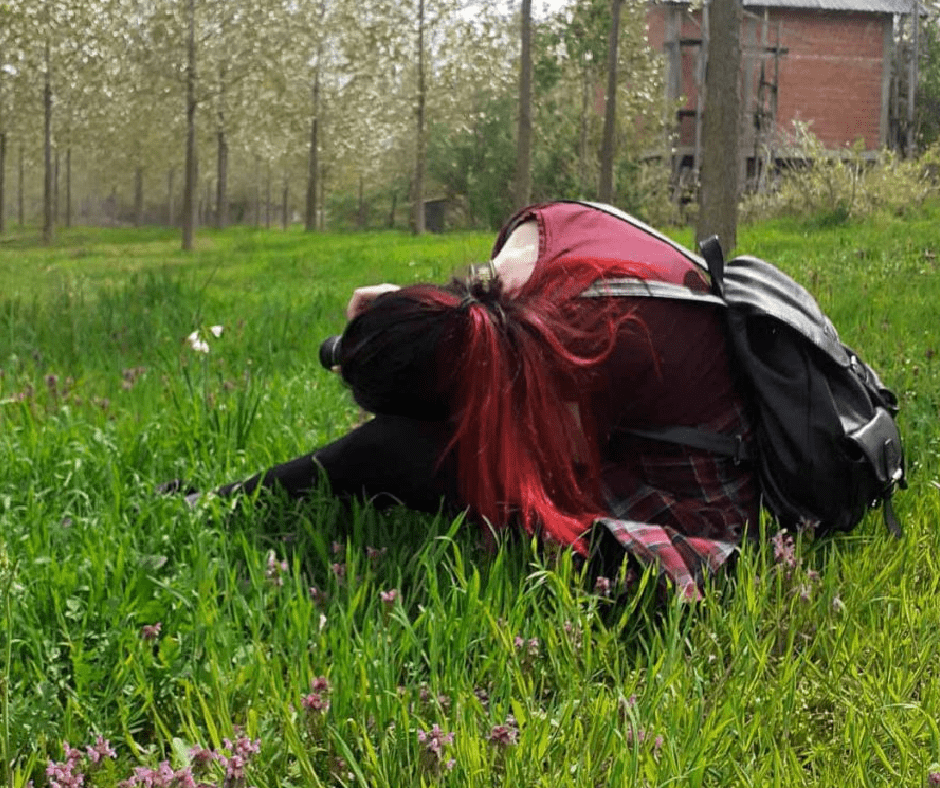
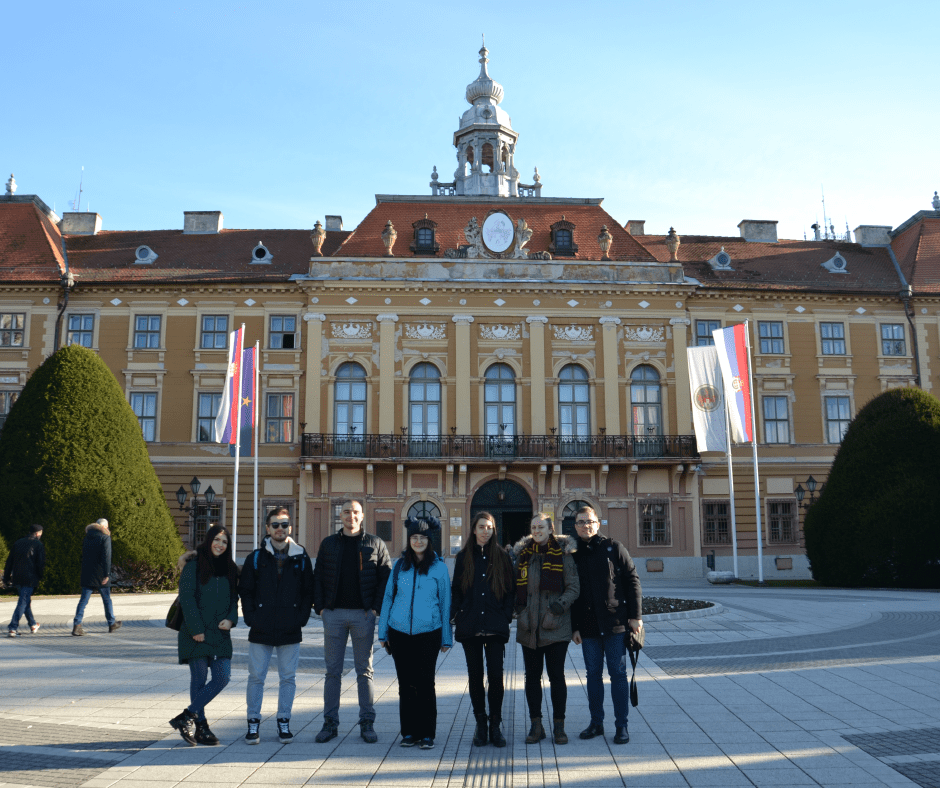
03 Astro Hike – October forest and constellations
05/11/2019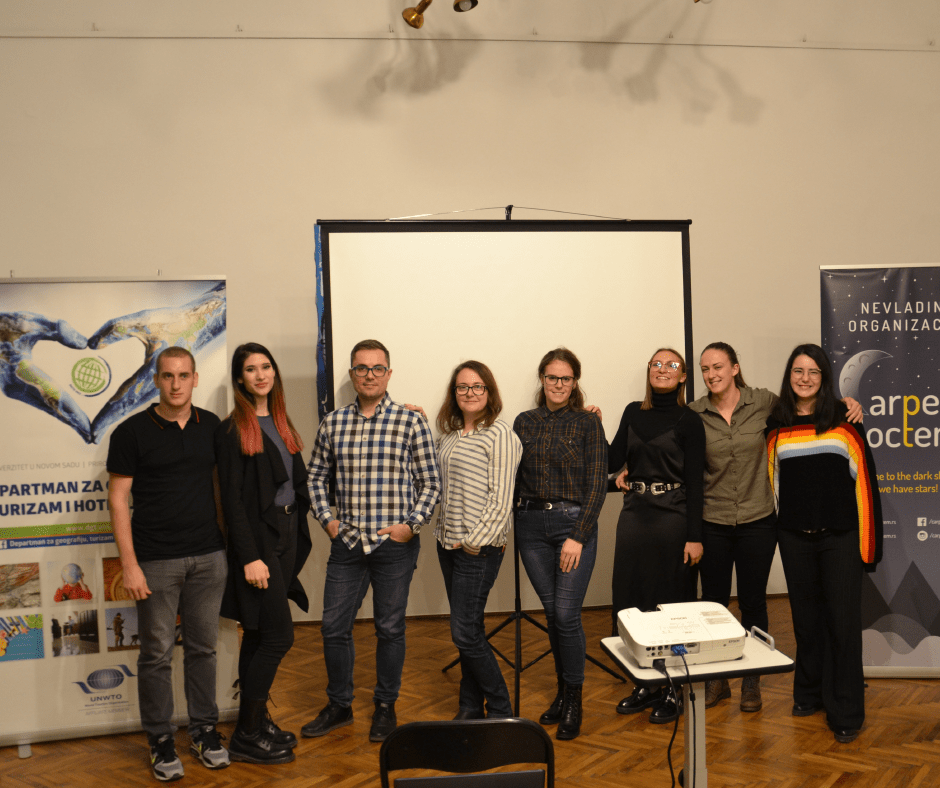
Subotica is back on the Milky Way!
20/12/2019The annual assembly of the organization and promotion of the Light Pollution Handbook
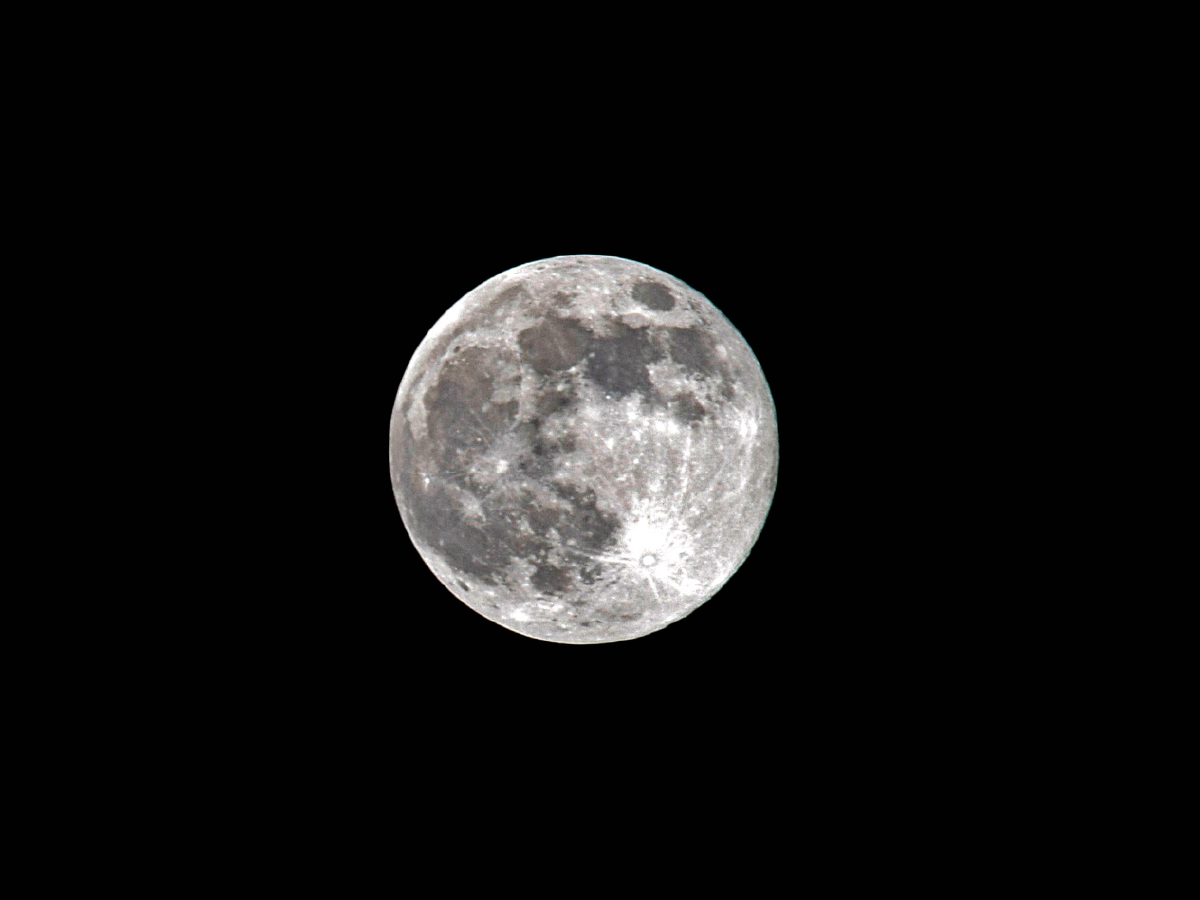
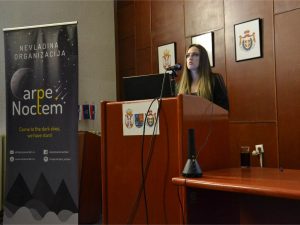
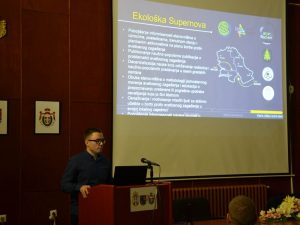
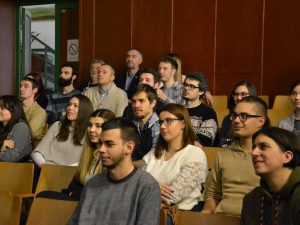
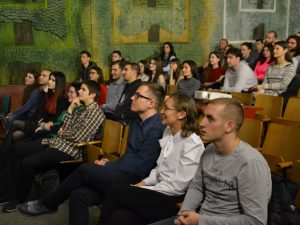
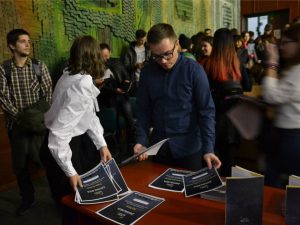
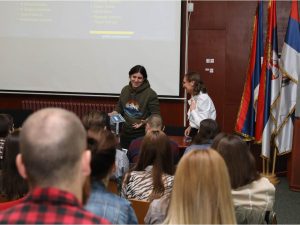
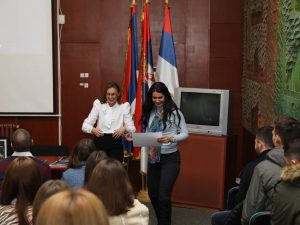
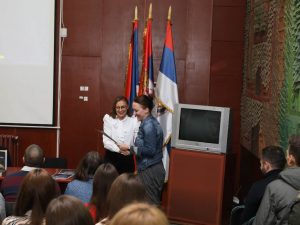
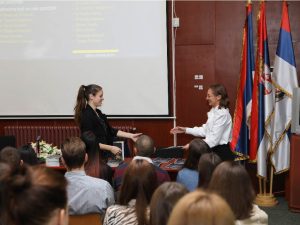
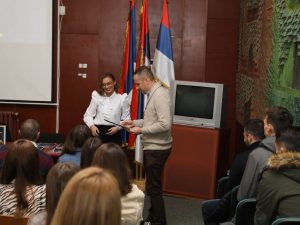
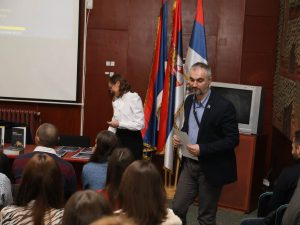
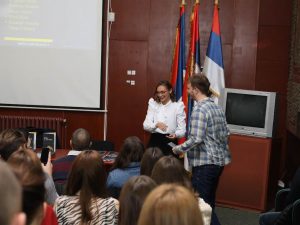
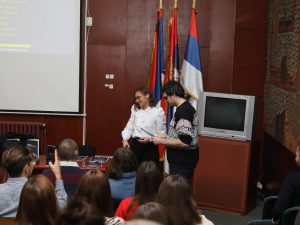
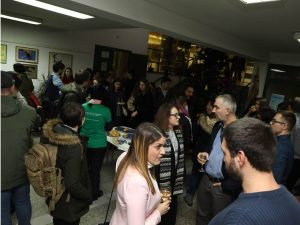
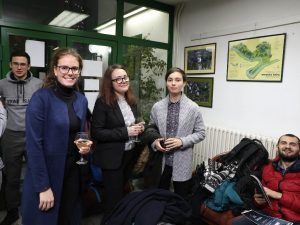
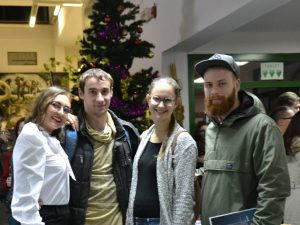
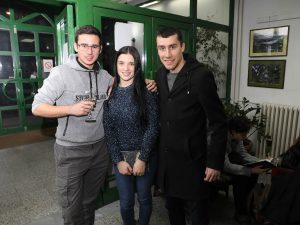
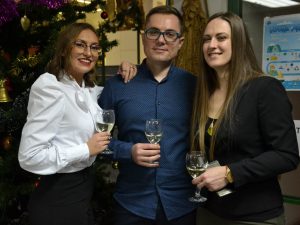
On December 12, 2019, the first annual assembly of the NGO "Carpe Noctem" took place, where we had the opportunity to summarize our impressions from the first calendar year we finished and present our Light Pollution Handbook and new plans and goals for the next year. The assembly was attended by over 50 members of the organization, professors, and other representatives of environmental associations, and apart from the fact that we symbolically brought the end of the year to an evening when the moon is full, the time was set at 7 pm, since the date of our foundation was Super moon (an evening when we see a full moon much bigger than usual), February 19, 2019 (picture of the super moon on the left, taken shortly after the founding - author Mina Jakšić).
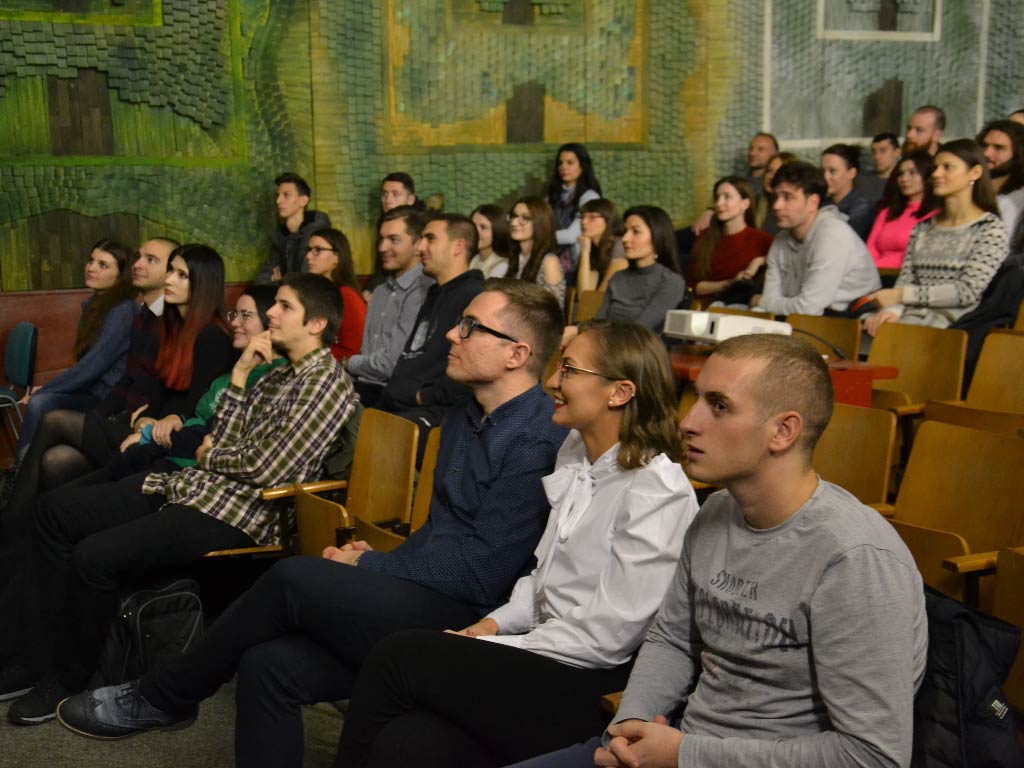
The assembly was held at the Institute for Nature Conservation of Voivodina Province in Novi Sad, and in addition to presenting the results of our work during 2019, the Light Pollution Handbook was presented as the flagship of all previous activities. This handbook was developed as part of the project "Ecological supernova - spreading awareness about light pollution" and is funded by the The Center for the Promotion of Science and the Department of Geography, Tourism, and Hotel Management at the Faculty of Sciences.
Table of Contents:
What we've done so far?
Now, what have we managed to do this year? First of all, we started with about 30 enthusiastic members, geographers, physicists, and biologists who decided to join forces and start doing something to educate the population on the issue of light pollution. Our work and energy we spread among the members, but also among other people who were at our events, is evident by the fact that only 10 months later we had 103 members!
Members in February 2019
Members in December 2019
Our members are no longer mostly students from the Faculty of Sciences in Novi Sad, but are located throughout Serbia and work in a variety of professions – from doctors to web designers, journalists, and so on. So, we have succeeded in our mission to show people how light pollution affects all of us and that everyone can contribute – even if only by transmitting information and educating others.
In addition to these great numbers when it comes to members of our association, we can also boast that our events were attended by over 1000 people! All of our events are designed to have an educational purpose. However, when almost three times as many people appear at the event as you imagined they would sign up, then it is a little harder to pay enough attention to every single participant. But that only means that our capacities can and must be increased, and we are sure that everyone from this night walk, festival, or underground walk heard the term "light pollution" somewhere in the air. Even if they did not, they must have wondered why we carry out all activities at night, what is the point of our events and the reason why our organization was founded.
02 Astro Hike
Star Triathlon
In search of a true darkness
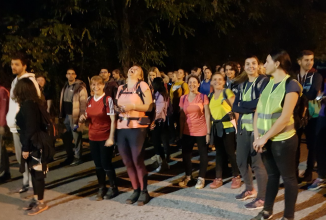
03 Astro Hike
What problems we've encountered?
In addition to these public events, we had many challenges in front of us – how to overcome a debt of 12,000 dinars in the first month, and then an even bigger problem – how to pay off the Star Triathlon festival, which cost us over 100,000 dinars, and charge participants the lowest possible amount to get to zero?! Besides donations from three companies and technical and logistical support from the Faculty of Sciences, its departments, and “Fruška Gora” National Park, we were still in the negative 😥 BUT! We decided to take a risk, borrow some money and rely on our belief that enough people will recognize our work and idea, and thus respond and help us pay off the festival.
And that's exactly what happened. 🤗
“ ... Soon we cross Iriški Venac, packed, running. Taking the phalanx formation, instead of shouting "This is Sparta!" like a herd of deer, we skip the road with shouting and screaming we can expect in some western. Although running on the road, especially at night, is generally not good for health or simply staying alive, the volunteers made sure that all people are there with their heads still on, after which they congratulated the nightwalkers, more for the existence of pulse than for the end of the stage.“
It's not all about the money
However, not only finances were problematic – an even bigger challenge was the organization of the event itself – how to move hundreds of people in the dark without injuries or losing anyone? How to coordinate about 50 volunteers, and to provide T-shirts, food, and drinks to everyone? What if people who came in an alcoholic state appear at our events, and we fail to see it in time? What if the public transport service does not meet our needs and does not send additional buses if we are late because we cannot lead the people faster?😱
A bunch of questions we try to answer in advance, and a bunch of them appearing in the meantime. But, whether it is a matter of luck or simply positive energy with which we all approached these tasks – nothing bad happened to us. Even the bad weather for the festival did not stop us from holding it again, although at that time we were all more like special units rescuing people from the muddy floods that occurred during the "light rain" – as the forecast sad.
"Wonderful people from whom much can be learned. Walk with them and turn off the lights when they tell you – it`s worth it!"
Step by step, sometimes with more, and sometimes with less success. After each event, we thought about the mistakes we made – what could be better next time? A lot of things, we just need time, more experience, and better equipment – we do not lack energy and will, everything else will come.
How we made Light Pollution Handbook?
As many know, and it is worth repeating – the organization was mostly created as a "by-product" of scientific research on light pollution conducted at the Faculty of Sciences – therefore, all the information and facts that we share with people and spread on social networks are formed by reading a large number of scientific papers published in renowned international scientific journals. One of the main ideas at the beginning of the year was for our team, in charge of this "scientific-research" part of our organization, to publish a popular science publication that will first serve as a supplement to textbook literature in elementary and middle schools where the problem of light pollution is not mentioned at all. Apart from educational institutions, the publication would be intended for environmental and astronomical associations, but also for any interested citizens who would like to learn more about it.
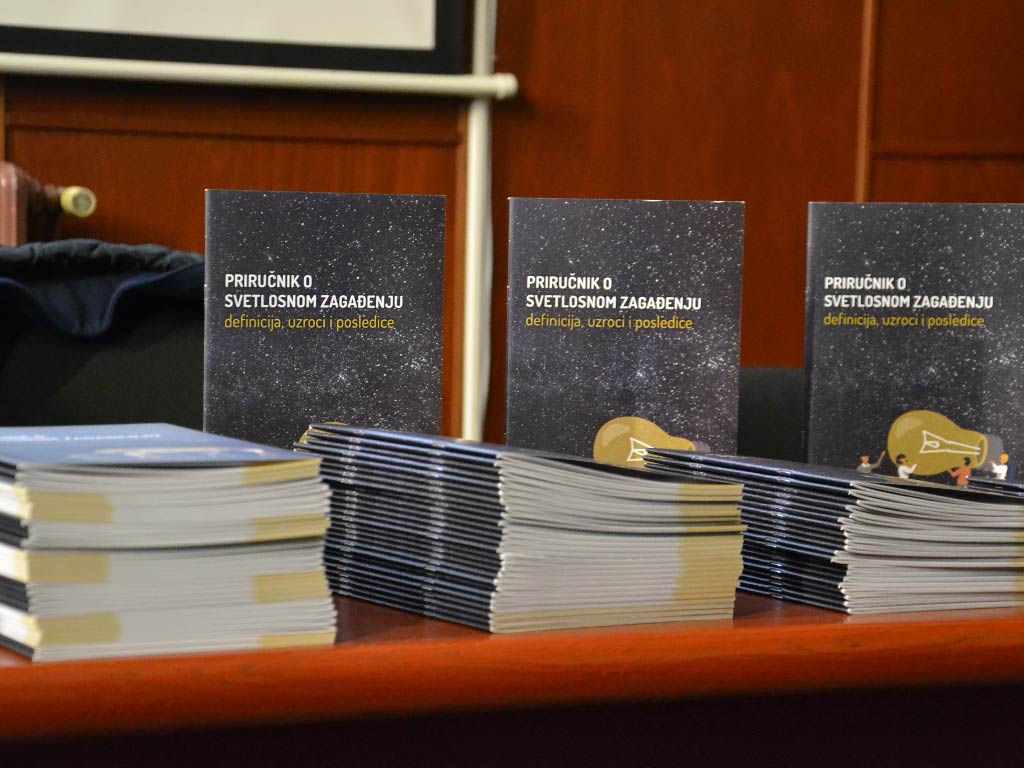
We realized this idea by applying for a grant from The Center for the Promotion of Science which provided funding for our project "Ecological supernova – spreading awareness about light pollution". The goal of the project is to publish a publication which we called Light Pollution Handbook, but at the same time to organize lectures and workshops in seven cities of Vojvodina and Belgrade.
Workshops will be held in elementary and middle schools, and lectures will be held in city libraries, museums, and similar places, where citizens will be able to join and ask questions after the lecture.
How did we gain international recognition?
Finally, we would like to say something about our international recognition 🤩 Namely, The International Dark-Sky Association, as the main and largest organization in the world that deals with the issue of light pollution, has recognized our work.
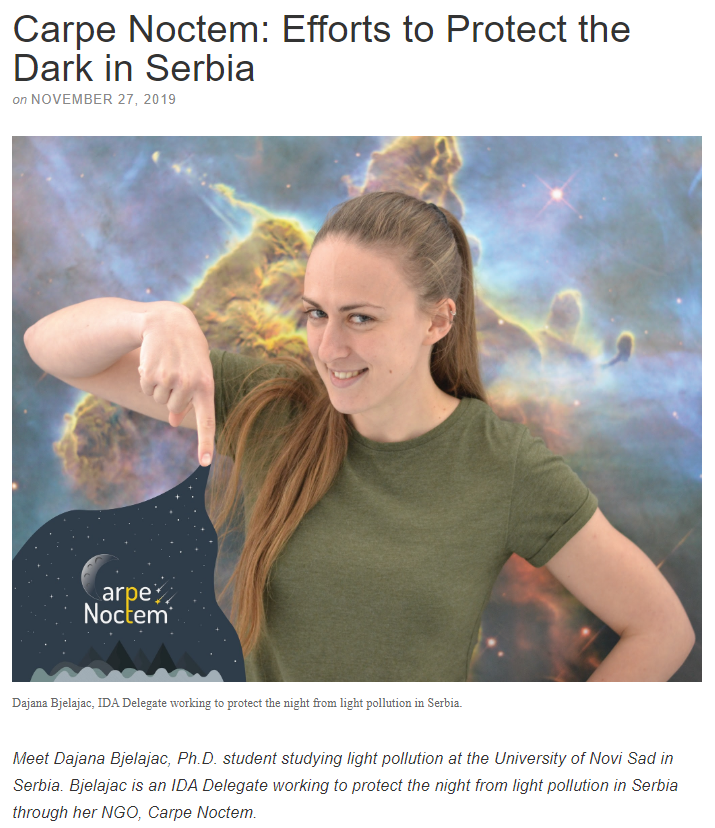
The cooperation was originally realized when our president Dajana Bjelajac became, so to speak, the representative of the International Dark-Sky Association in Serbia around the middle of the current year. After that, Dajana shared all our ideas and activities we accomplished with Bettymaya Foott, Director of Inclusion and Public Relations, who (to say the least) was thrilled with our ideas and immediately set out to promote us on all the networks she could.
Accordingly, we ended up on the home page of the website of this world organization in the article entitled "Carpe Noctem: Efforts to protect the Dark in Serbia" but also in the electronic mailbox of every fighter against light pollution in the world who joined the International Dark Sky Community.
How did that affect us? Well, for example, the other day we were contacted by a gentleman from the Hawaiian Islands who wanted to know more about astro tourism in Serbia. Some exchange of experiences or staff? We'll see what awaits us. 😎
There will be more information about our plans for next year in January, and until then we recommend that you read the blogs about the activities we have managed to carry out so far at the following link: Our activities
PHOTO GALLERY FROM THE ANNUAL ASSEMBLY
For more photos visit our Facebook page: NGO Carpe Noctem – photo albums
Author
Dajana Bjelajac
Doctoral student and teaching assistant at the Department of Geography, Tourism and Hotel Management at Faculty of Sciences in Novi Sad. She found herself in the issue of light pollution quite by accident and decided to make it a "scientific vocation" for her quite intentionally. Representative of the International Dark Sky Association, where she is also a member of the Dark Sky Places Committee. She is the winner of 2020 "Dark Sky Defender Award". For more blog posts click here.